
Flexing the Grid: Ireland
With one of the largest energy procurements in its history, Ireland is laying the groundwork to flex its grid

To take a step back, Ireland’s electricity grid has two systems to move (transmission) and deliver (distribution) generated power: think pylons and poles!
The distribution system is operated by the ESB and delivers the power we use day to day. Encouraging consumers to shift energy use in sync with renewable generation highs and lows promises a cost-effective, localised solution to grid constraints.
This is known as demand flexibility, and despite the lofty promises, incentivising flexibility at scale remains a technology and consumer behaviour nightmare.
I mentioned this in my last post:
Demand Response Services, where businesses are compensated for helping stabilise a renewables-driven grid.
Today and Tomorrow
In Ireland there have been a number of smaller flexibility pilots and products but most efforts have produced mixed results. This is reflected in the data with only 5% of system demand flexible, delivered by a small number of larger generators.
Despite this Ireland’s utility regulator, the CRU, has set an ambitious target of 20-30% system wide demand flexibility by 2030: basically this will be the largest procurement of demand flexibility in the history of the state.
The Latest Step
The ESB is now on the move with its latest flexibility proposal seeking 100MW of flexible capacity over the next few years from anyone with at least 5 MW of capacity: like a big battery.
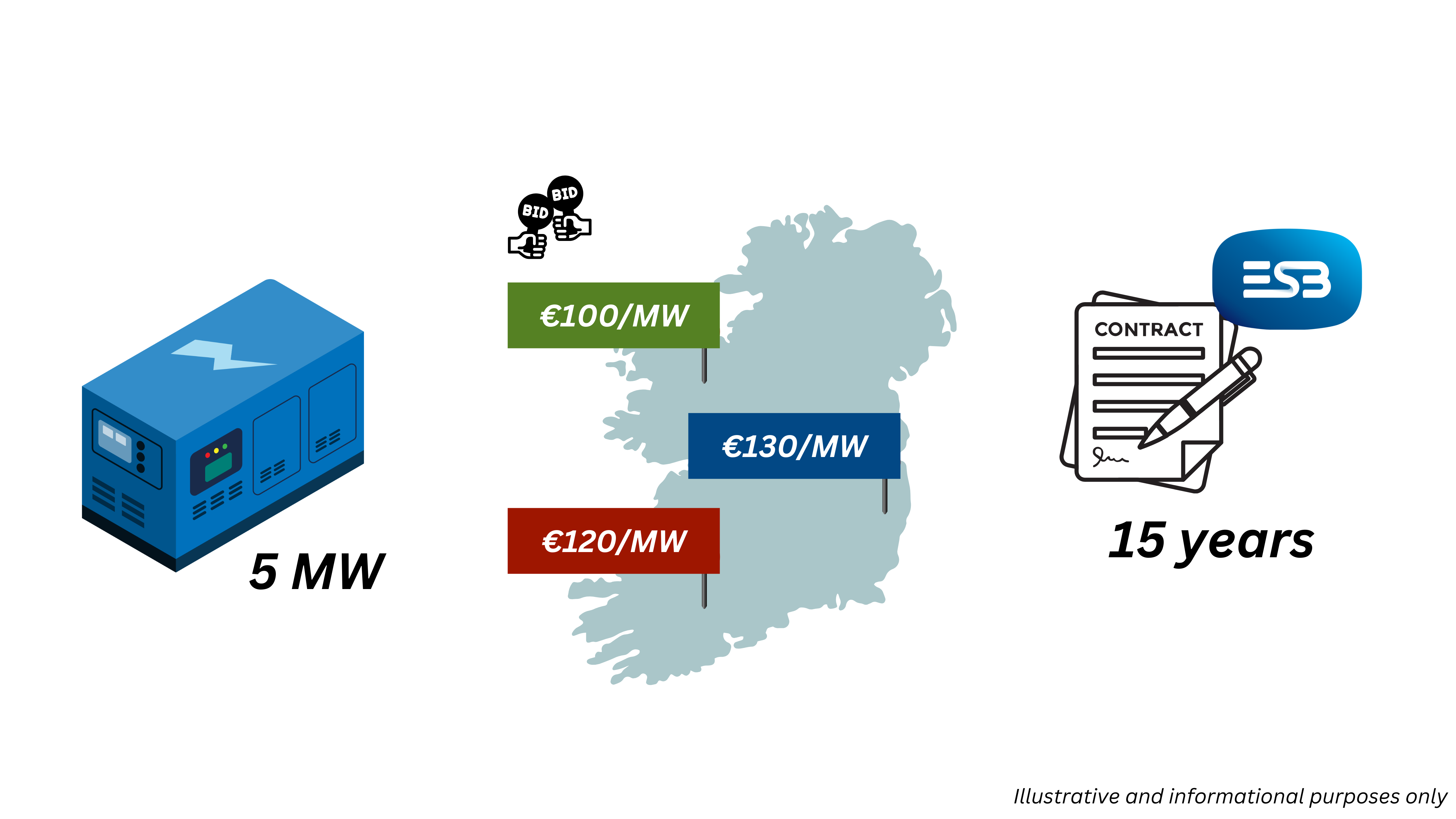
Each asset will bid their capacity in an auction and if successful, paid a set price to exist within an event driven environment: you'll be paid to exist but if you don’t perform during a grid congestion event you get nothing.
This gets a bit technical, but the ESB is proposing to issue daily ‘Operating Envelopes’ a day ahead based on the expected grid congestion in your area, essentially providing performance guidelines to you. The below illustrates a battery importing or exporting (charging or discharging) during a single day:
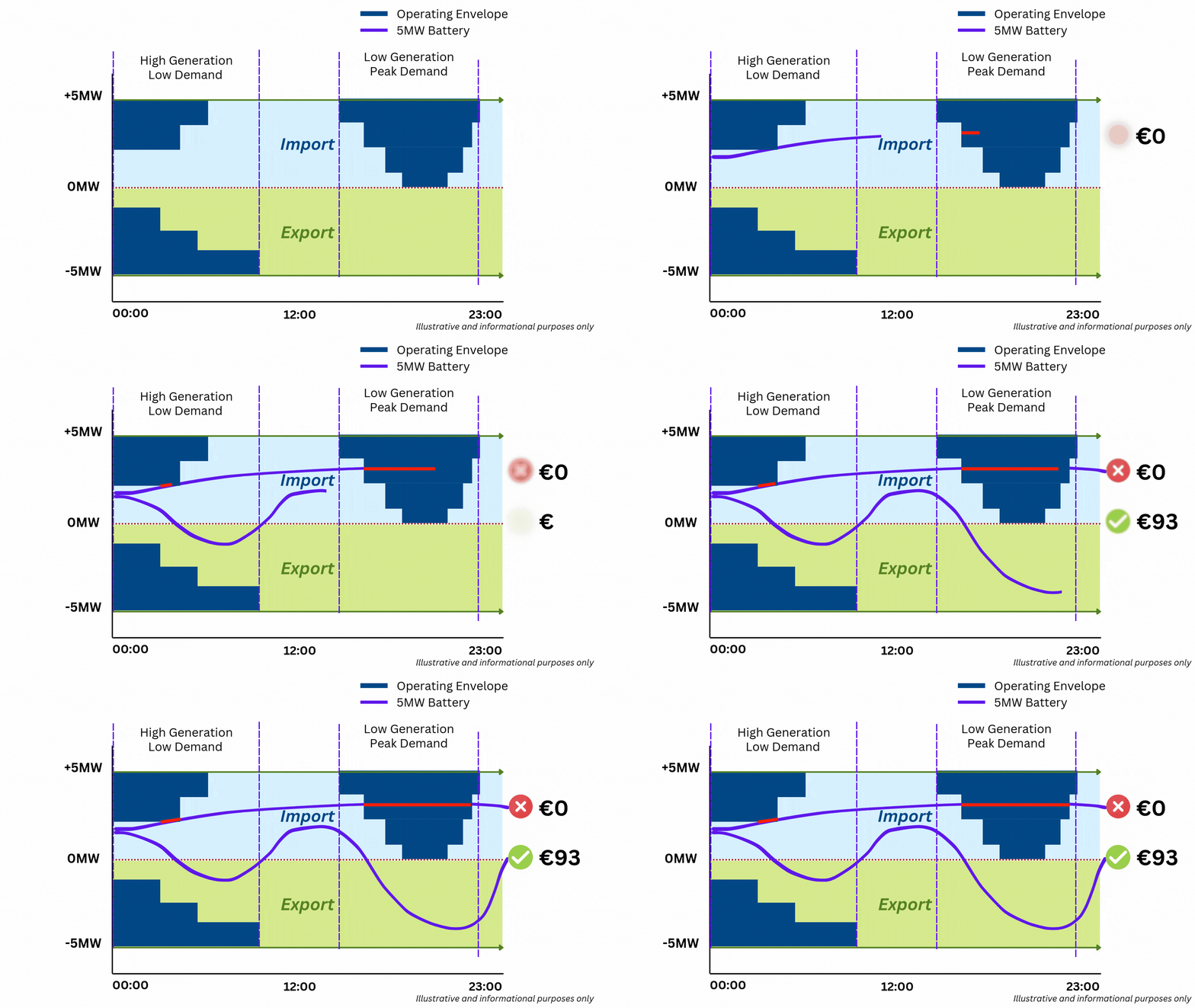
High performance is expected, so if the battery underperforms the cut off (80%) by breaching the Operating Envelopes, the battery will receive no payment for that day. This ensures that participants are incentivised to provide a reliable service when called upon, which ultimately translates to greater system security and reduced energy costs for consumers.
So what?
We view this as a significant step towards creating a favourable investment environment for businesses considering installing battery storage by providing new ways to generating revenue whilst creating energy resilience and proactively hitting sustainability goals.
AtPowerScope, we are actively helping customers understand and assess the benefits of these emerging opportunities.